
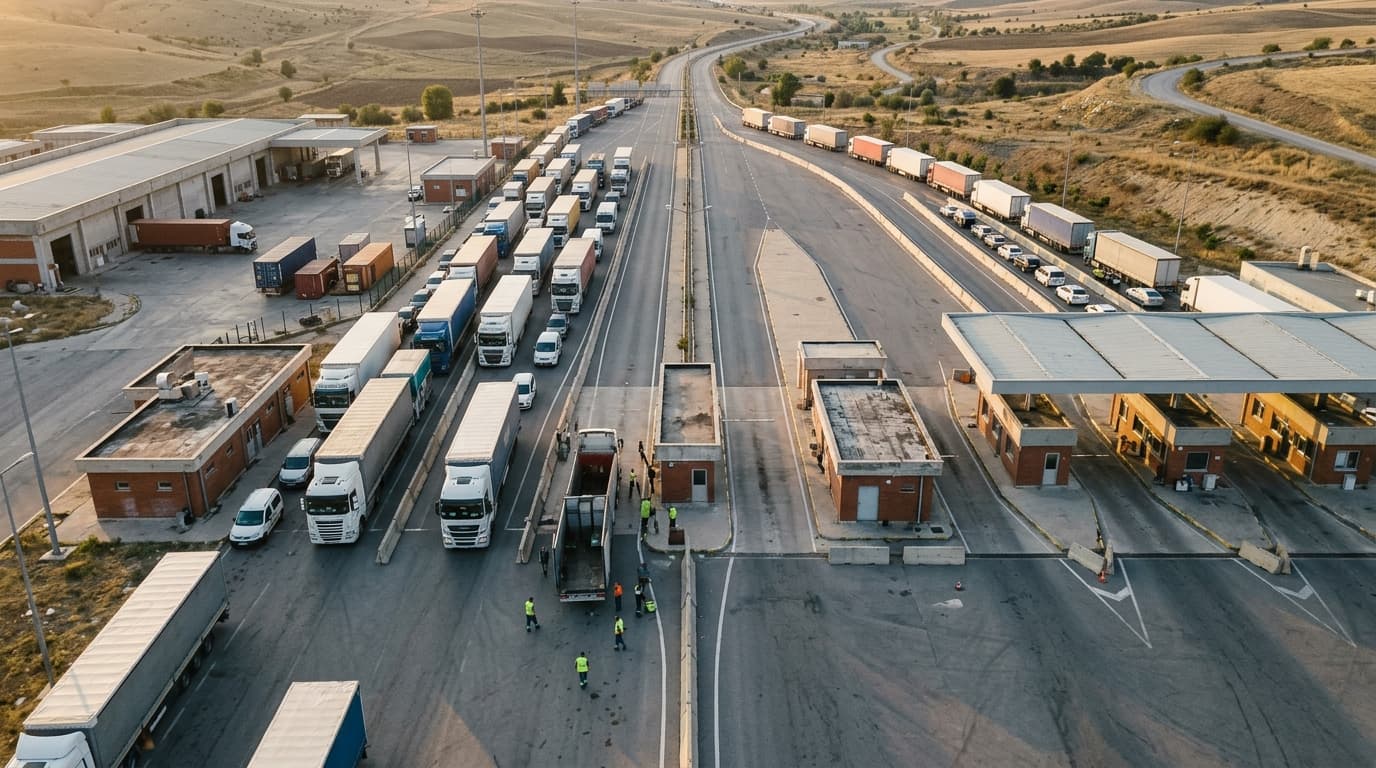
Turkey Customs Clearance for EU Shipments: Complete Guide for Business Success
Turkey customs clearance for EU shipments requires precise documentation, strategic timing, and thorough understanding of both Turkish and European Union regulations. Professional handling of these complex procedures ensures smooth cross-border trade and compliance success.
Turkey customs clearance for EU shipments requires precise documentation, strategic timing, and thorough understanding of both Turkish and European Union regulations. The complex web of customs procedures, duty calculations, and cross-border compliance affects thousands of businesses shipping between Turkey and the 27 EU member states daily.
Understanding Turkey-EU Customs Framework
The customs relationship between Turkey and the European Union operates under the Customs Union Agreement, established in 1995. This framework eliminates customs duties on industrial goods but maintains specific procedures for agricultural products, processed agricultural goods, and certain textiles.
Turkish customs authorities process approximately 2.3 million export declarations annually to EU destinations. The most frequently used customs procedures include temporary admission, processing under customs control, and outward processing relief. Each procedure demands specific documentation and timing requirements.
The Authorized Economic Operator (AEO) certification provides significant advantages for regular Turkey-EU shipments. Companies holding AEO status experience 40% faster clearance times and reduced physical inspections. The certification costs approximately 15,000 Turkish Lira but typically pays for itself within 18 months for businesses shipping more than 50 consignments annually.
Key Documentation Requirements
Every Turkey customs clearance for EU shipments requires standardized documentation. The commercial invoice must include detailed product descriptions, harmonized system codes, country of origin, and precise values in euros or Turkish lira. Export declarations through the BILGE system demand accuracy to prevent delays or penalties ranging from 500 to 50,000 Turkish Lira.
Movement certificates EUR.1 or origin declarations facilitate preferential tariff treatment under the Turkey-EU Customs Union. These documents must be obtained before shipment departure and remain valid for four months from issuance date. Professional logistics providers like Kolay Parsiyel maintain expertise in securing these certificates efficiently.
Strategic Customs Procedures for Different Cargo Types
Textile and clothing shipments face additional scrutiny due to quota restrictions and anti-dumping measures. Turkish textile exports to the EU totaled 8.2 billion euros in 2023, making proper customs clearance critical for this sector. Outward processing traffic (OPT) allows Turkish manufacturers to process EU materials and re-export finished goods with preferential treatment.
Automotive parts represent another significant category requiring specialized handling. Turkey exports over 2 billion euros worth of automotive components to EU markets annually. These shipments often qualify for cumulation rules, allowing Turkish and EU origin materials to be combined without losing preferential status.
Agricultural and Food Product Complexities
Agricultural shipments demand additional certifications including phytosanitary certificates, health certificates, and sometimes import licenses from destination countries. Fresh produce exports from Turkey's Mediterranean region to markets like Germany, France, and the Netherlands require temperature-controlled transport and expedited customs processing.
Processed food products must comply with EU food safety regulations including HACCP certification and traceability requirements. The European Food Safety Authority maintains specific standards that Turkish exporters must meet, often requiring pre-shipment laboratory testing and documentation.
Timing Optimization for Turkey Customs Clearance for EU Shipments
Strategic timing significantly impacts clearance efficiency and costs. Monday morning submissions experience 25% longer processing times due to weekend backlog accumulation. Tuesday through Thursday submissions typically clear fastest, averaging 6-8 hours for standard commercial shipments.
Peak seasons affect processing speeds dramatically. December shipments for holiday inventory face delays averaging 2-3 additional days. Summer months see increased agricultural exports creating bottlenecks at major crossing points like Kapikule and Ipsala.
Border crossing selection influences total transit time and costs. The Kapikule-Svilengrad crossing handles 40% of Turkey-EU truck traffic but experiences frequent congestion. Alternative crossings like Hamzabeyli-Makaza offer faster processing for certain routes, particularly shipments destined for Eastern European markets.
Electronic Systems Integration
The BILGE electronic customs system connects directly with EU customs databases through the New Computerised Transit System (NCTS). This integration enables real-time tracking and reduces paper documentation requirements. However, system maintenance windows every second Sunday between 06:00-10:00 CET halt all electronic submissions.
Pre-arrival processing capabilities allow customs declarations submission up to 30 days before cargo arrival. This advance preparation enables immediate release upon physical cargo arrival, reducing warehouse storage costs and improving supply chain efficiency.
Cost Management and Duty Optimization
Customs duty calculations for Turkey-EU shipments involve multiple factors including product classification, origin determination, and applicable trade agreements. Misclassification penalties average 12,000 Turkish Lira per incident, making accurate harmonized system code selection critical.
Value-added tax (VAT) implications vary significantly between EU member states. German VAT rates of 19% contrast sharply with Luxembourg's 17% standard rate. Strategic routing through different EU entry points can optimize overall tax burden while maintaining compliance.
Temporary admission procedures allow Turkish companies to export goods for exhibition, demonstration, or processing with duty suspension. This procedure saves approximately 8-12% in upfront costs but requires guarantee bonds and strict timeline adherence.
Currency Fluctuation Impact
Turkish Lira volatility affects duty calculations and declared values. Customs authorities use daily exchange rates published by the Central Bank of Turkey. Significant currency movements between invoice date and clearance date can create discrepancies requiring additional documentation or value adjustments.
Professional freight forwarders maintain currency hedging strategies and timing optimization to minimize exchange rate impacts. Companies like Kolay Parsiyel provide guidance on optimal invoicing currencies and timing strategies based on current market conditions.
Common Compliance Challenges and Solutions
Documentation inconsistencies cause 60% of clearance delays. Common issues include mismatched weights between commercial invoices and packing lists, incorrect consignee information, or missing required certificates. Standardized document preparation procedures eliminate most of these errors.
Origin determination disputes arise frequently with complex supply chains. When Turkish companies use imported components, establishing Turkish origin for preferential treatment requires detailed supplier declarations and production records. The "last substantial transformation" rule determines final origin status.
Physical inspection rates vary by product category and shipper history. New exporters face inspection rates of 15-20% while established AEO certificate holders experience less than 3% physical examination rates. Building positive compliance history through consistent accurate declarations reduces future inspection likelihood.
Penalty Avoidance Strategies
Late declaration penalties start at 0.05% of cargo value per day, capping at 10% maximum. Electronic submission deadlines require careful monitoring, particularly during holiday periods when processing windows change.
Incorrect classification appeals can be filed within 15 days of penalty notification. Success rates for appeals with proper technical justification exceed 70%. Professional classification review before shipment prevents most disputes.
Technology Integration and Future Developments
Blockchain technology pilots between Turkish and EU customs authorities aim to create immutable documentation trails. These trials, expected to expand commercially by 2025, promise to reduce document verification time from hours to minutes.
Artificial intelligence systems now analyze historical shipment data to predict inspection likelihood and optimize clearance strategies. Early adopters report 15-20% reduction in total clearance time through predictive analytics implementation.
The Single Window initiative connects multiple government agencies through unified electronic interfaces. Full implementation across all EU member states will streamline compliance for health, safety, and environmental requirements beyond basic customs procedures.
Experienced logistics partners understand these evolving requirements and maintain systems integration capabilities. Kolay Parsiyel invests continuously in technology upgrades to ensure clients benefit from the latest customs processing innovations while maintaining full regulatory compliance.
Frequently Asked Questions
How long does Turkey customs clearance typically take for EU shipments?
Standard commercial shipments clear Turkish customs within 6-8 hours during weekdays, while complex declarations requiring additional documentation or physical inspection may take 24-48 hours. AEO certified companies experience approximately 40% faster processing times.
What documents are mandatory for every Turkey-EU export shipment?
Every shipment requires a commercial invoice, packing list, export declaration through BILGE system, and transport documents. Additionally, movement certificate EUR.1 or origin declaration enables preferential treatment under the Turkey-EU Customs Union agreement.
Can Turkish companies use temporary admission procedures for EU shipments?
Yes, temporary admission allows Turkish exporters to send goods to EU for exhibitions, demonstrations, or processing with duty suspension. This procedure requires guarantee bonds and strict timeline compliance but saves 8-12% in upfront costs.
How do currency fluctuations affect customs valuations?
Turkish customs authorities use daily Central Bank exchange rates for duty calculations. Significant currency movements between invoice date and clearance can create discrepancies requiring value adjustments or additional documentation to maintain compliance.
What penalties apply for late or incorrect customs declarations?
Late declaration penalties start at 0.05% of cargo value per day, capping at 10% maximum. Misclassification penalties average 12,000 Turkish Lira per incident. Appeals can be filed within 15 days with 70% success rates for properly justified cases.
Frequently Asked Questions
1How long does Turkey customs clearance typically take for EU shipments?
Standard commercial shipments clear Turkish customs within 6-8 hours during weekdays, while complex declarations requiring additional documentation or physical inspection may take 24-48 hours. AEO certified companies experience approximately 40% faster processing times.
2What documents are mandatory for every Turkey-EU export shipment?
Every shipment requires a commercial invoice, packing list, export declaration through BILGE system, and transport documents. Additionally, movement certificate EUR.1 or origin declaration enables preferential treatment under the Turkey-EU Customs Union agreement.
3Can Turkish companies use temporary admission procedures for EU shipments?
Yes, temporary admission allows Turkish exporters to send goods to EU for exhibitions, demonstrations, or processing with duty suspension. This procedure requires guarantee bonds and strict timeline compliance but saves 8-12% in upfront costs.
4How do currency fluctuations affect customs valuations?
Turkish customs authorities use daily Central Bank exchange rates for duty calculations. Significant currency movements between invoice date and clearance can create discrepancies requiring value adjustments or additional documentation to maintain compliance.
5What penalties apply for late or incorrect customs declarations?
Late declaration penalties start at 0.05% of cargo value per day, capping at 10% maximum. Misclassification penalties average 12,000 Turkish Lira per incident. Appeals can be filed within 15 days with 70% success rates for properly justified cases.
References
- European Commission Customs Union Agreement
- Turkish Ministry of Trade Export Statistics
- World Customs Organization Trade Facilitation Guidelines
- European Food Safety Authority Regulations
- Turkish Central Bank Daily Exchange Rates
Related Articles
Turkey to France Shipping Times and Costs: The Complete 2026 Breakdown
Turkey to France shipping times range from 24 hours by air to 18 days by sea, with road freight taking 4 to 8 days depending on route and cargo type. Costs in 2026 vary from 180 euros per pallet for groupage to over 4,800 euros for a full truckload. This breakdown covers all transport modes, real 2026 rates, customs requirements, and practical strategies to reduce cost and transit time.
Freight Forwarding from Turkey Best Practices: A Professional's Operational Guide for 2026
Applying freight forwarding from Turkey best practices in 2026 means navigating updated customs regulations, choosing the right transport mode for each cargo type, and leveraging consolidation options to control costs. This operational guide covers documentation requirements, mode-specific transit times, packaging compliance, and the digital tools shaping Turkish export logistics this year.
Turkey to Belgium Cargo Rates Comparison: Full Breakdown for 2026
Comparing Turkey to Belgium cargo rates in 2026 requires looking beyond the base freight quote. This article breaks down FTL and LTL pricing, sea versus road trade-offs, hidden costs, and practical benchmarks for shippers on this high-volume corridor.
How to Ship Furniture from Turkey to Europe: A Practical 2026 Guide
Shipping furniture from Turkey to Europe requires choosing between FTL, partial cargo, and sea freight, while managing customs documentation, packaging standards, and 2026 rate structures. This guide covers every practical decision point for exporters and importers on this high-volume trade corridor.