
LTL Freight Shipping Turkey to Europe Explained: Complete 2026 Guide
LTL freight shipping connects Turkish exporters with European markets through consolidated cargo services, sharing truck space to reduce costs. This comprehensive guide covers routes, pricing, documentation, and optimization strategies for efficient Turkey-Europe trade.
LTL freight shipping Turkey to Europe explained: Less-than-truckload shipping connects Turkish exporters with European markets through consolidated cargo services, reducing costs by sharing truck space with multiple shippers across key trade routes.
Understanding LTL Freight Fundamentals Between Turkey and Europe
Less-than-truckload freight shipping represents a critical logistics solution for businesses moving goods between Turkey and European Union markets. This shipping method allows multiple companies to share truck space and transportation costs, making it economically viable for shipments ranging from 150 kg to 10,000 kg.
The Turkey-Europe corridor handles approximately 2.8 million tons of LTL cargo annually as of 2026, with average transit times between 3-7 days depending on destination cities. Turkish exporters benefit from established trade relationships, with Germany, Italy, and France representing the largest volume destinations for partial cargo shipments.
Key characteristics of LTL shipping include consolidated loading, shared transportation costs, and flexible pickup scheduling. Unlike full truckload (FTL) shipments that require entire truck capacity, LTL services accommodate smaller cargo volumes through efficient space utilization and route optimization.
Weight and Dimensional Classifications
LTL carriers classify shipments based on weight brackets and dimensional factors. Standard classifications include:
- Light parcels: 1-150 kg (handled through express services)
- Small LTL: 150-1,500 kg
- Medium LTL: 1,500-5,000 kg
- Large LTL: 5,000-10,000 kg
Dimensional weight calculations apply when cargo volume exceeds standard weight-to-space ratios. The formula uses length × width × height (in centimeters) ÷ 4,000 to determine billable weight, ensuring fair pricing for both dense and voluminous shipments.
Major Routes and Transit Times from Turkey to European Markets
The primary LTL freight corridors connect Turkish industrial centers with European distribution hubs through well-established land routes. Istanbul serves as the main consolidation point for westbound cargo, while Ankara and Izmir handle significant volumes from central and western Turkey respectively.
The Trans-European Transport Network (TEN-T) facilitates efficient cargo movement through Bulgaria, Serbia, and Hungary before reaching Western European destinations. Average transit times for 2026 reflect improved border processing and infrastructure investments:
- Turkey to Germany: 4-5 days via Budapest corridor
- Turkey to Italy: 3-4 days via Trieste route
- Turkey to France: 5-6 days through Alpine passes
- Turkey to Netherlands: 5-7 days via German transit
- Turkey to Poland: 3-4 days through Eastern European routes
Border Crossing Efficiency
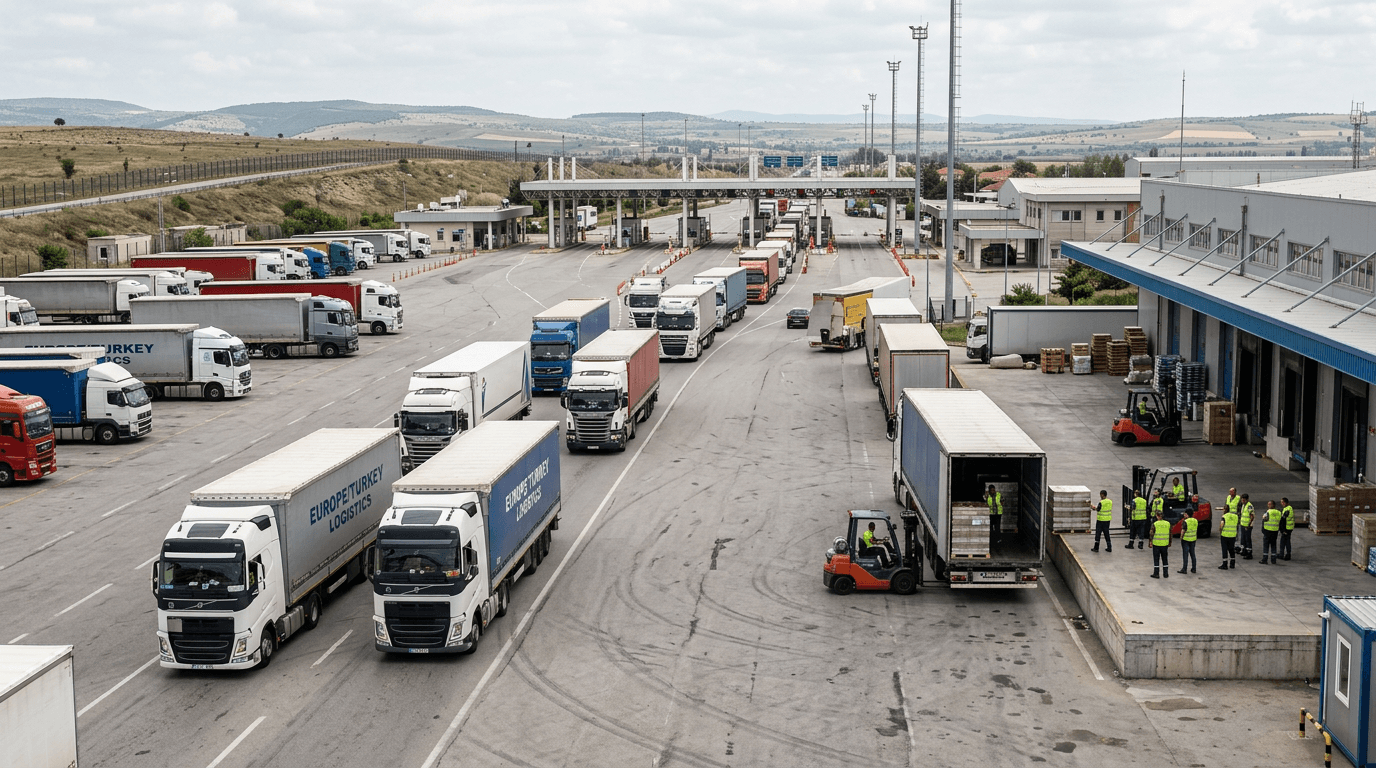
The Kapıkule-Kapitan Andreevo crossing remains the primary gateway for Turkish-European LTL traffic, processing over 15,000 trucks weekly in 2026. Electronic customs pre-clearance systems reduce average processing times to 2-3 hours for properly documented LTL shipments.
Alternative crossings through Hamzabeyli-Makaza and İpsala-Kipi provide backup options during peak seasons or maintenance periods. These secondary routes add 4-6 hours to total transit times but ensure supply chain continuity for time-sensitive cargo.
Cost Structure and Pricing Factors for LTL Freight Shipping Turkey to Europe
LTL freight pricing between Turkey and Europe operates on a complex matrix considering weight, distance, cargo classification, and seasonal demand fluctuations. Base rates for 2026 range from €0.85 to €2.20 per kilogram depending on destination zones and service levels.
Distance-based pricing zones divide Europe into three categories:
- Zone 1 (Balkans, Eastern Europe): €0.85-1.15 per kg
- Zone 2 (Central Europe, Italy): €1.20-1.65 per kg
- Zone 3 (Western Europe, Scandinavia): €1.70-2.20 per kg
Freight class determines final pricing through density and handling requirements. Classes range from 50 (dense, easy-to-handle items) to 500 (low-density, fragile goods). A shipment of automotive parts typically falls into class 100-125, while textiles might classify as 150-175.
Additional Cost Components
Beyond base transportation rates, LTL shipments incur several supplementary charges. Fuel surcharges fluctuate monthly based on diesel prices, averaging 12-18% of base rates during 2026. Customs documentation fees range from €25-45 per shipment for standard commercial invoices.
Insurance coverage costs approximately 0.3-0.7% of declared cargo value, with minimum premiums of €15 per shipment. Companies like Kolay Parsiyel often include basic coverage in their standard service packages, providing added value for regular customers.
Dimensional weight penalties apply when cargo cube-out before weight limits. The industry standard calculation divides total cubic centimeters by 4,000, billing whichever is greater between actual and dimensional weight.
Documentation and Customs Requirements for Turkish-European LTL Shipping
Cross-border LTL freight requires comprehensive documentation compliance to ensure smooth customs clearance and avoid costly delays. The primary documents include commercial invoices, packing lists, transport documents, and customs declarations formatted according to EU regulations.
Commercial invoices must contain detailed product descriptions, Harmonized System (HS) codes, country of origin markings, and accurate valuations in euros. Turkish exporters should include manufacturer details, buyer information, and payment terms to facilitate customs assessment.
The Union Customs Code (UCC) governs import procedures for Turkish goods entering EU markets. Electronic customs declarations through the Import Control System 2 (ICS2) became mandatory for all LTL shipments exceeding €150 in value as of January 2026.
AEO Certification Benefits
Authorized Economic Operator (AEO) status provides significant advantages for frequent LTL shippers. Turkish companies with AEO certification experience 40-60% faster customs processing times and reduced physical inspection rates.
The mutual recognition agreement between Turkey and EU ensures AEO benefits apply throughout the shipping corridor. Companies processing over 500 LTL shipments annually should consider AEO certification to streamline operations and reduce compliance costs.
Choosing a Reliable LTL Carrier for Turkey-Europe Routes
Selecting an appropriate LTL carrier requires evaluating multiple factors including network coverage, transit reliability, customer service quality, and technology capabilities. Established carriers typically offer better infrastructure and tracking systems, while regional specialists might provide more competitive pricing for specific routes.
Network density determines pickup and delivery flexibility within Turkey and European destinations. Carriers with extensive partner networks can offer door-to-door service to smaller cities without requiring customers to arrange separate local transportation.
Technology integration affects shipment visibility and customer experience. Modern carriers provide real-time tracking, automated notifications, and digital documentation through web portals and mobile applications. These capabilities become essential for managing multiple concurrent shipments.
Service Level Considerations
Standard LTL service offers economical rates with flexible pickup scheduling and normal transit times. Express LTL provides guaranteed delivery dates at premium rates, suitable for time-critical cargo requiring predictable arrival times.
Specialized services accommodate unique requirements such as temperature-controlled transport, hazardous materials handling, or white-glove delivery. Companies like Kolay Parsiyel differentiate themselves by offering comprehensive service portfolios addressing diverse customer needs.
Carrier financial stability affects service continuity and claim resolution. Research carrier ratings, insurance coverage, and industry reputation before establishing long-term partnerships. Diversifying between 2-3 carriers reduces dependency risks while maintaining competitive pricing options.
Optimization Strategies and Cost Savings for LTL Freight
Effective LTL freight management combines strategic planning, operational efficiency, and carrier relationship optimization to minimize total logistics costs. Consolidation strategies represent the most significant opportunity for cost reduction in Turkish-European trade lanes.
Shipment consolidation involves combining multiple orders or destinations into larger, more economical loads. Rather than shipping individual orders as they arise, businesses can batch shipments weekly or bi-weekly to achieve better pricing tiers and improved carrier priority.
Packaging optimization reduces dimensional weight penalties while protecting cargo during transit. Using appropriately sized containers and eliminating excess packaging material can decrease shipping costs by 15-25% for low-density goods.
Volume Commitment Programs
Annual volume commitments with preferred carriers unlock significant discounts and service enhancements. Agreements covering 200+ shipments annually typically yield 10-20% rate reductions compared to spot pricing.
Multi-lane agreements covering various European destinations provide additional leverage in rate negotiations. Carriers prefer customers offering consistent volume across multiple routes rather than sporadic high-volume shipments on single lanes.
Payment term negotiations can reduce overall logistics costs through early payment discounts or extended credit terms. Some carriers offer 2-3% discounts for payments within 15 days, effectively reducing transportation costs for companies with strong cash flow management.
Frequently Asked Questions
What is the minimum shipment size for LTL freight from Turkey to Europe?
Most LTL carriers accept shipments starting from 150 kg, though some handle smaller parcels at premium rates. The sweet spot for economical LTL shipping typically begins around 300-500 kg where per-kilogram rates become competitive compared to express services.
How long does LTL freight take from Turkey to major European cities?
Transit times vary by destination: Germany 4-5 days, Italy 3-4 days, France 5-6 days, Netherlands 5-7 days, and Poland 3-4 days. These timeframes include customs clearance and assume no delays at border crossings or due to weather conditions.
What customs duties apply to Turkish goods shipped via LTL to Europe?
Duty rates depend on product classification and preferential trade agreements. The EU-Turkey Customs Union eliminates duties on most industrial goods, while agricultural products face standard EU external tariffs ranging from 0-25% based on HS codes and seasonal factors.
Can LTL carriers handle temperature-sensitive goods between Turkey and Europe?
Yes, many LTL carriers offer refrigerated services for temperature-controlled cargo. Rates typically increase by 30-50% for reefer service, with strict temperature monitoring throughout transit. Advanced booking and proper packaging remain essential for product integrity.
What insurance coverage is recommended for LTL shipments to Europe?
Standard carrier liability covers €8.33 per kg for loss or damage. Additional cargo insurance covering full replacement value costs 0.3-0.7% of shipment value and provides comprehensive protection against theft, damage, or total loss during transit.
Partner with Experienced LTL Freight Professionals
Navigating LTL freight shipping between Turkey and Europe requires expertise in regulations, carrier networks, and cost optimization strategies. Professional logistics partners provide the knowledge and relationships necessary to ensure reliable, cost-effective cargo movement across these vital trade corridors. Contact experienced freight professionals to discuss your specific shipping requirements and develop customized solutions for your Turkish-European trade operations.
Frequently Asked Questions
1What is the minimum shipment size for LTL freight from Turkey to Europe?
Most LTL carriers accept shipments starting from 150 kg, though some handle smaller parcels at premium rates. The sweet spot for economical LTL shipping typically begins around 300-500 kg where per-kilogram rates become competitive compared to express services.
2How long does LTL freight take from Turkey to major European cities?
Transit times vary by destination: Germany 4-5 days, Italy 3-4 days, France 5-6 days, Netherlands 5-7 days, and Poland 3-4 days. These timeframes include customs clearance and assume no delays at border crossings or due to weather conditions.
3What customs duties apply to Turkish goods shipped via LTL to Europe?
Duty rates depend on product classification and preferential trade agreements. The EU-Turkey Customs Union eliminates duties on most industrial goods, while agricultural products face standard EU external tariffs ranging from 0-25% based on HS codes and seasonal factors.
4Can LTL carriers handle temperature-sensitive goods between Turkey and Europe?
Yes, many LTL carriers offer refrigerated services for temperature-controlled cargo. Rates typically increase by 30-50% for reefer service, with strict temperature monitoring throughout transit. Advanced booking and proper packaging remain essential for product integrity.
5What insurance coverage is recommended for LTL shipments to Europe?
Standard carrier liability covers €8.33 per kg for loss or damage. Additional cargo insurance covering full replacement value costs 0.3-0.7% of shipment value and provides comprehensive protection against theft, damage, or total loss during transit.
References
- European Commission Transport Statistics
- Turkish Statistical Institute Trade Data
- International Road Transport Union Reports
- EU Customs Union Documentation
- Trans-European Transport Network Guidelines
Related Articles
Turkey to France Shipping Times and Costs: The Complete 2026 Breakdown
Turkey to France shipping times range from 24 hours by air to 18 days by sea, with road freight taking 4 to 8 days depending on route and cargo type. Costs in 2026 vary from 180 euros per pallet for groupage to over 4,800 euros for a full truckload. This breakdown covers all transport modes, real 2026 rates, customs requirements, and practical strategies to reduce cost and transit time.
Freight Forwarding from Turkey Best Practices: A Professional's Operational Guide for 2026
Applying freight forwarding from Turkey best practices in 2026 means navigating updated customs regulations, choosing the right transport mode for each cargo type, and leveraging consolidation options to control costs. This operational guide covers documentation requirements, mode-specific transit times, packaging compliance, and the digital tools shaping Turkish export logistics this year.
Turkey to Belgium Cargo Rates Comparison: Full Breakdown for 2026
Comparing Turkey to Belgium cargo rates in 2026 requires looking beyond the base freight quote. This article breaks down FTL and LTL pricing, sea versus road trade-offs, hidden costs, and practical benchmarks for shippers on this high-volume corridor.
How to Ship Furniture from Turkey to Europe: A Practical 2026 Guide
Shipping furniture from Turkey to Europe requires choosing between FTL, partial cargo, and sea freight, while managing customs documentation, packaging standards, and 2026 rate structures. This guide covers every practical decision point for exporters and importers on this high-volume trade corridor.