
Cheapest Way to Ship from Turkey to Netherlands in 2026
For most commercial shipments between 50 and 5,000 kilograms, LTL road freight (groupage) is the cheapest way to ship from Turkey to Netherlands in 2026, typically costing €85 to €140 per cubic meter with 5 to 8 day transit. This article breaks down exact costs, regulations, and practical strategies to reduce your total landed cost on this high-volume trade corridor.
Why Shipping Costs Matter on the Turkey-Netherlands Corridor
The Turkey-Netherlands trade corridor is one of the busiest freight routes in Europe. In 2026, bilateral trade between Turkey and the Netherlands exceeds €9.2 billion annually, with goods moving constantly between Istanbul, Izmir, Bursa, and Rotterdam, Amsterdam, and Eindhoven. Whether you are a small business owner moving 200 kilograms of textile samples or a mid-size manufacturer shipping machinery components, understanding the cheapest way to ship from Turkey to Netherlands can directly affect your profit margins. The difference between a poorly planned shipment and an optimized one can be as much as 40% on total logistics costs.
Understanding Your Shipping Options in 2026
Before comparing costs, it helps to understand the four main freight modes available on this route. Each has a different cost structure, transit time, and weight threshold that determines when it becomes economical.
Full Truckload (FTL)
FTL shipments move a dedicated truck from a Turkish origin point to a Dutch destination. In 2026, average FTL rates from Istanbul to Rotterdam range between €2,800 and €3,600 per trailer, depending on fuel surcharges, toll costs across Bulgaria, Serbia, Hungary, Austria, and Germany, and seasonal demand. FTL makes sense when your cargo fills at least 15 to 18 pallets or weighs more than 10,000 kilograms. For smaller shipments, you pay for space you are not using.
Less-Than-Truckload (LTL) or Partial Cargo
This is where significant savings happen for most businesses. LTL, also called groupage or parsiyel in Turkish, consolidates cargo from multiple shippers into a single truck. You only pay for the space and weight your goods actually occupy. In 2026, LTL rates from Turkey to the Netherlands typically run between €85 and €140 per cubic meter, or €0.55 to €0.90 per kilogram, depending on which rate basis is higher. A 500-kilogram, 2-cubic-meter shipment that might cost €3,200 on a dedicated truck costs roughly €280 to €420 via a reliable LTL service. That is a dramatic difference for growing businesses.
Sea Freight
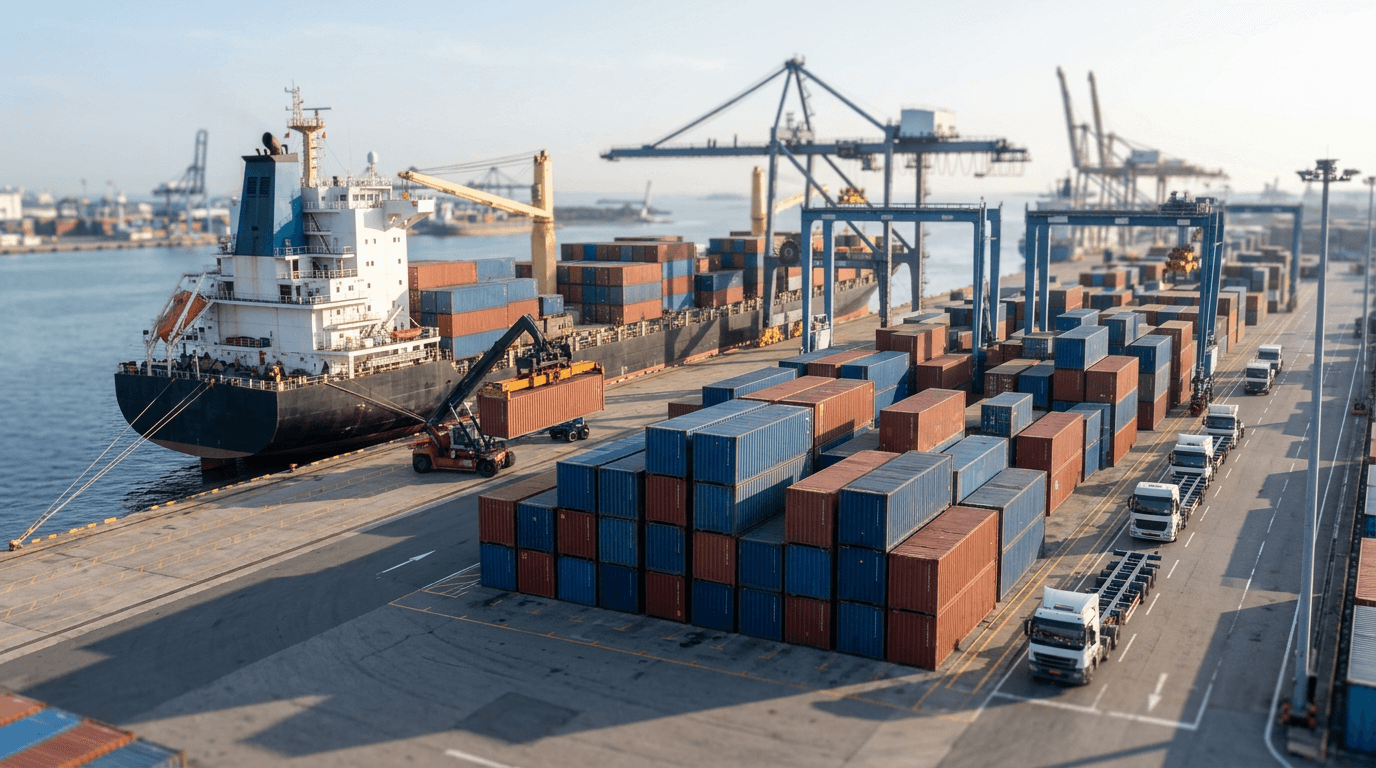
Container shipping from Turkish ports like Mersin, Izmir Alsancak, or Ambarlı to the Port of Rotterdam remains a viable option for heavy or bulky cargo. In 2026, a 20-foot container (FCL) from Izmir to Rotterdam is priced between €950 and €1,450, depending on the carrier and booking lead time. LCL (less-than-container-load) sea freight costs approximately €45 to €75 per cubic meter but adds considerably to transit time. Total door-to-door sea freight transit currently averages 18 to 26 days, making it unsuitable for time-sensitive goods.
Air Freight
Air cargo is the most expensive option. Istanbul Airport to Amsterdam Schiphol air freight rates in 2026 average €3.80 to €6.50 per kilogram, with minimum charge weights of 45 kilograms. Air freight is only economical for high-value, low-weight goods, urgent shipments, or goods with an extremely high value-to-weight ratio such as electronics or pharmaceuticals. For most standard commercial shipments, air freight should be a last resort.
The Cheapest Way to Ship from Turkey to Netherlands: A Practical Breakdown
For the vast majority of shipments between 50 kilograms and 5,000 kilograms, LTL road freight is the cheapest way to ship from Turkey to Netherlands by a clear margin. Here is a practical cost comparison based on 2026 market rates for a standard commercial shipment of 800 kilograms, 4 cubic meters, valued at €12,000, shipped from Istanbul to Amsterdam.
- LTL Road Freight: €480 to €620 total, transit 5 to 8 business days
- LCL Sea Freight: €380 to €520 total freight cost, but 20 to 26 days transit plus port handling fees of €90 to €150
- FTL Road Freight: €2,800 to €3,600 total, transit 4 to 6 business days
- Air Freight: €3,040 to €5,200 total, transit 2 to 3 days
When you factor in the hidden costs of sea freight (port handling, documentation fees, potential demurrage), LTL road freight often comes out cheaper in total landed cost even compared to LCL sea, especially for shipments under 5 cubic meters. The 5 to 8 day road transit also eliminates the need for large safety stock buffers that slow sea freight demands.
Weight vs. Volume: Understanding Chargeable Weight
One detail many shippers overlook is chargeable weight calculation. Road freight carriers in 2026 use a volumetric conversion factor of 1 cubic meter equals 333 kilograms for LTL shipments. If your goods are light and bulky, you pay based on volume. If they are dense and heavy, you pay by actual weight. Always calculate both before requesting a quote. A shipment that is 1,000 kilograms but occupies 5 cubic meters will be charged at the volumetric equivalent of 1,665 kilograms. Missing this calculation leads to unexpected invoice surprises.
Key Regulations Affecting Turkey-to-Netherlands Shipments in 2026
Regulatory compliance directly affects your shipping costs. Errors in documentation can cause costly delays at EU border crossings.
Customs and Import Duties
Turkey is not an EU member, meaning all commercial shipments from Turkey to the Netherlands require full customs clearance. The EU-Turkey Customs Union, in place since 1996, eliminates tariffs on most industrial goods, but agricultural products, processed food, and certain textile categories are subject to import duties ranging from 6% to 12%. In 2026, the EU's Carbon Border Adjustment Mechanism (CBAM) also applies import costs to certain steel, aluminum, and cement products, adding approximately €15 to €40 per tonne depending on carbon content declarations from Turkish exporters.
Transit Country Permits and Cabotage Rules
Road shipments from Turkey to the Netherlands travel through Bulgaria, Serbia (or Romania), Hungary, Austria, and Germany before entering the Netherlands. Turkish carriers require bilateral transport permits for EU entry, and in 2026, the permit allocation system managed under ECMT (now ITF) quotas continues to affect capacity and pricing, particularly in the fourth quarter when permit availability tightens. Working with a forwarder who has established carrier relationships, like Kolay Parsiyel, ensures your shipment is not delayed due to permit shortages.
Incoterms Selection
Your choice of Incoterms dramatically affects total cost. Shipping on EXW (Ex Works) terms makes the buyer responsible for all costs from the seller's factory gate. DAP (Delivered at Place) puts the seller in control of freight costs to the destination. For cost optimization, many Turkey-Netherlands shippers use FCA (Free Carrier) terms at the Turkish origin, allowing the buyer's freight forwarder to manage onward costs. Aligning Incoterms with your freight strategy is one of the simplest ways to reduce total shipping spend.
Practical Tips to Reduce Shipping Costs on This Route
Beyond choosing the right mode, several operational decisions can lower your per-shipment cost considerably.
- Consolidate shipments: Instead of shipping every week, combine two weeks of orders into one LTL booking. This reduces per-kilogram costs by up to 15% on groupage services.
- Book in advance: LTL departures from Istanbul to Rotterdam typically run twice weekly. Booking 5 to 7 days ahead secures better rates and priority loading.
- Package efficiently: Reduce void space in packaging. Every cubic meter you eliminate saves money on volumetric weight charges.
- Use a dedicated Turkey-Europe freight specialist: General forwarders often have higher rates on specific corridors. Specialists like Kolay Parsiyel operate fixed weekly groupage services on Turkey-Netherlands lanes, providing consistent pricing and faster transit through established carrier networks.
- Prepare documentation accurately: Errors on CMR documents, EUR.1 movement certificates, or commercial invoices cause border delays that translate into demurrage and storage fees. In 2026, Turkish customs has expanded its digital pre-clearance system, so electronic submission of export declarations 24 hours before loading reduces processing time at Kapıkule and other border gates.
- Understand seasonal surcharges: Q4 (October to December) sees freight rates increase 12 to 20% on Turkey-Europe road lanes due to holiday demand and permit scarcity. Plan major shipments for Q1 or Q2 when possible.
Choosing the Right Freight Partner for Turkey-Netherlands Shipping
The cheapest quoted rate is not always the cheapest total cost. A forwarder who mishandles customs documentation or uses unreliable subcontractors can cost you more in delays, penalties, and customer dissatisfaction than the savings on the initial rate. When evaluating freight partners for the Turkey-Netherlands corridor, consider these factors.
- Weekly fixed departures rather than ad-hoc consolidation
- In-house customs expertise for both Turkish export and EU import procedures
- Real-time shipment tracking from origin to delivery
- Clear liability terms and cargo insurance options
- Transparent surcharge structures, including fuel, toll, and security fees
Kolay Parsiyel operates regular groupage departures from Istanbul, Izmir, and Bursa to major Dutch destinations including Rotterdam, Amsterdam, Eindhoven, and Utrecht. By sharing truck space across multiple shippers, the service delivers competitive per-unit costs while maintaining the 5 to 8 day road transit that most businesses require for reliable inventory management.
If your business ships regularly between Turkey and the Netherlands, requesting a lane-specific rate agreement rather than spot quotes can reduce your average freight cost by 8 to 18% over a calendar year. Volume commitments, even at modest levels of 2 to 4 shipments per month, are typically enough to negotiate preferential groupage rates with established operators.
Ready to get a precise cost estimate for your next Turkey-to-Netherlands shipment? Contact Kolay Parsiyel for a tailored groupage quote based on your specific cargo dimensions, origin, and destination requirements.
Frequently Asked Questions
1What is the cheapest way to ship from Turkey to Netherlands for small businesses?
LTL road freight, also called groupage or parsiyel, is the cheapest option for shipments between 50 and 5,000 kilograms. In 2026, rates run €85 to €140 per cubic meter with 5 to 8 day transit, making it significantly more affordable than FTL, air, or sea freight for most small business cargo volumes.
2How long does LTL road freight from Turkey to Netherlands take in 2026?
Standard LTL groupage services from Istanbul or Izmir to Rotterdam or Amsterdam take 5 to 8 business days in 2026. Transit time depends on border crossing conditions at Kapıkule, routing through Bulgaria, Hungary, Austria, and Germany, and the specific delivery address within the Netherlands.
3Do I need to pay customs duties when shipping from Turkey to Netherlands?
Most industrial goods benefit from zero tariffs under the EU-Turkey Customs Union, but full customs documentation is still required. Agricultural products, processed foods, and certain textiles face duties of 6 to 12%. In 2026, CBAM regulations also apply additional costs to steel, aluminum, and cement imports from Turkey.
4How is chargeable weight calculated for Turkey-Netherlands road freight?
Road freight carriers use a volumetric conversion of 1 cubic meter equals 333 kilograms for LTL shipments. Your shipment is charged at whichever is higher, actual weight or volumetric weight. A 500 kg shipment occupying 2 cubic meters would be charged at the volumetric equivalent of 666 kilograms, not 500 kilograms.
5When is sea freight cheaper than road freight for Turkey to Netherlands shipments?
Sea freight LCL becomes cost-competitive for shipments above 8 to 10 cubic meters when transit time is not critical. However, when port handling fees, documentation costs, and longer transit times requiring extra inventory are factored in, road LTL often remains cheaper in total landed cost for shipments under 15 cubic meters.
References
- European Commission Directorate-General for Taxation and Customs Union (DG TAXUD)
- International Transport Forum (ITF) Road Haulage Permit Statistics 2026
- Turkish Exporters Assembly (TIM) Trade Statistics 2026
- Port of Rotterdam Authority Freight Volume Report 2026
- EU Carbon Border Adjustment Mechanism (CBAM) Official Implementation Guidelines
Related Articles
Turkey to France Shipping Times and Costs: The Complete 2026 Breakdown
Turkey to France shipping times range from 24 hours by air to 18 days by sea, with road freight taking 4 to 8 days depending on route and cargo type. Costs in 2026 vary from 180 euros per pallet for groupage to over 4,800 euros for a full truckload. This breakdown covers all transport modes, real 2026 rates, customs requirements, and practical strategies to reduce cost and transit time.
Freight Forwarding from Turkey Best Practices: A Professional's Operational Guide for 2026
Applying freight forwarding from Turkey best practices in 2026 means navigating updated customs regulations, choosing the right transport mode for each cargo type, and leveraging consolidation options to control costs. This operational guide covers documentation requirements, mode-specific transit times, packaging compliance, and the digital tools shaping Turkish export logistics this year.
Turkey to Belgium Cargo Rates Comparison: Full Breakdown for 2026
Comparing Turkey to Belgium cargo rates in 2026 requires looking beyond the base freight quote. This article breaks down FTL and LTL pricing, sea versus road trade-offs, hidden costs, and practical benchmarks for shippers on this high-volume corridor.
How to Ship Furniture from Turkey to Europe: A Practical 2026 Guide
Shipping furniture from Turkey to Europe requires choosing between FTL, partial cargo, and sea freight, while managing customs documentation, packaging standards, and 2026 rate structures. This guide covers every practical decision point for exporters and importers on this high-volume trade corridor.